


A child’s eye
At convent school, yearly exams were the norm from age seven, our results in every subject pinned to the classroom wall in rank order. The philosophy was clear: the nuns liked the students who regularly made the top five, tolerated the middle bunch and gave up on the rest. I was in the top five squad — if I slipped, questions would be asked: what went wrong? are you unwell?
What a relaxing introduction to the notion of achievement.
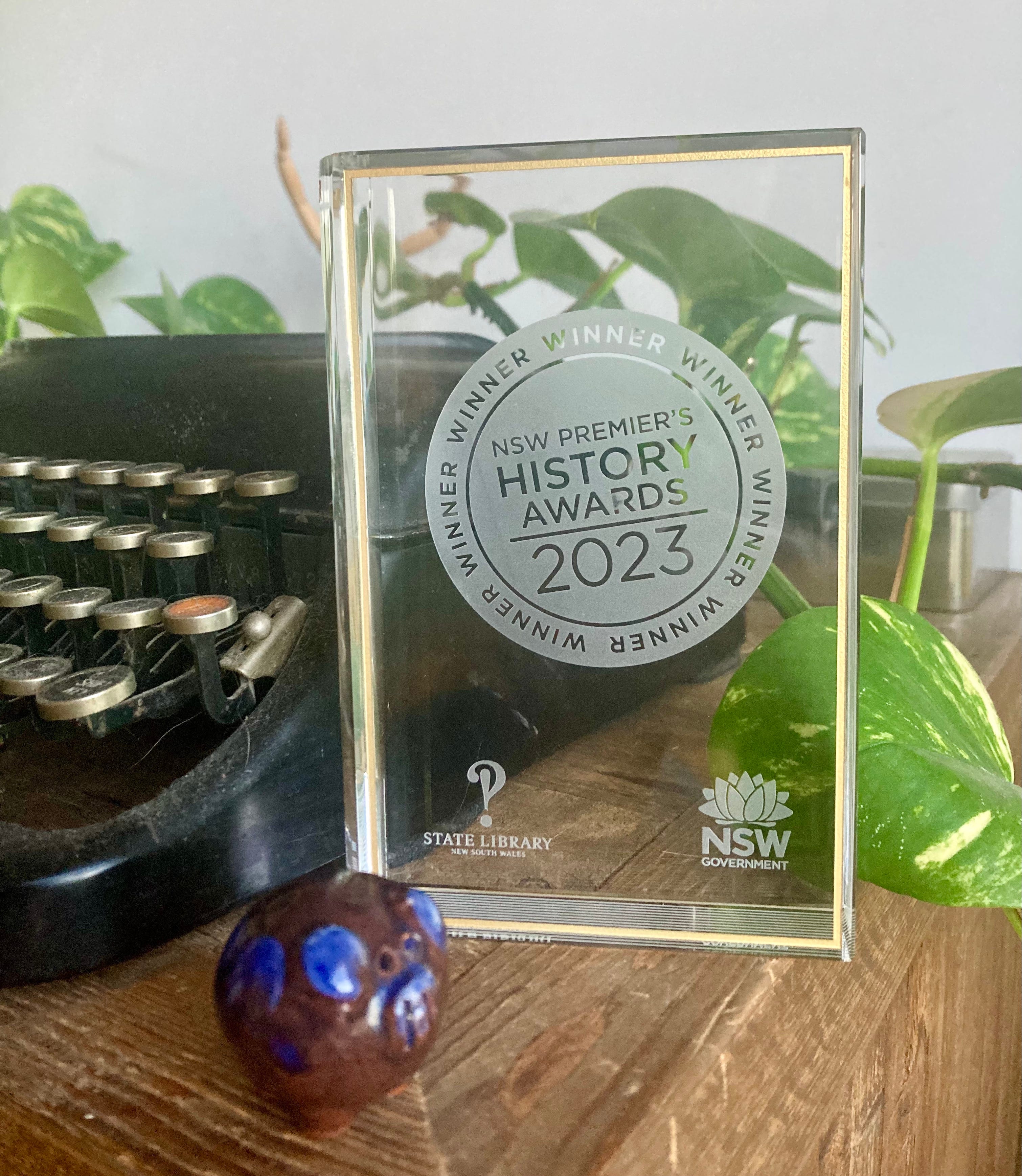
At the end of primary, cups and shields from an impressive cabinet — which we’d pass by with the same reverence we felt for the altar in chapel — were awarded at the year-end assembly. I won the shield for French, the cup for History, and a consolation clay pig for English. The headmistress nun explained to the whole school and all the parents that because I’d scooped the English cup the previous year, it wasn’t fair for me to win again. Hence the pig.
Unfortunately, I misread this a bit.
When I walked up to accept the little pig from the nun I was terrified of, I was pink-faced and ashamed, and when I took my seat again I couldn’t look at anyone. My emotions were a mess: Why a pig? I thought. Although I liked being acknowledged and I loved English more than anything, the way the headmistress had said it made me feel ashamed. “It’s not fair for Emily to keep winning,” she’d told the packed room in her unnervingly arch tone — she didn’t know how to say a thing without sounding severe. I didn’t hear “you’re good at this” — I heard: “don’t be greedy.”
Oh, I thought. She means like a pig.
Still, I should have enjoyed this award system overall, shouldn’t I, being one of the lucky ones? But the closest I came to enjoyment was relief. The anxiety of slipping out of favour filled me up.
As it happens, the consolation pig was the last prize I’d win for nearly forty years.
Along came Sonya Hartnett
The first time I considered that awards might not be a straightforward acknowledgement of “the best” was during my first year of living in Australia. I was in the audience of a small writers’ festival listening to a panel that included Sonya Hartnett. I was very taken by her. She’d just won the Astrid Lindgren Memorial Award for literature, the world’s richest children’s book award.
There were two things Sonya said about awards that I’ve never forgotten. The first is that she was on the verge of giving up full-time writing and getting a job in a bookshop when she got the call to say she’d won. She thought it was a joke. The second is that while she gratefully accepted the award, her view of awards had come from judging them, not winning them. And this was (roughly) her description of judging awards: you read the books, you love this one and this one, you hate this one and this one, and you tolerate these ones; then you get into a room with the other judges and no one has the same opinion as you at all. You thrash it out for hours until finally you end up with a winner that everyone can agree on.
Agreeing on was not the same as this is the best book, she clarified. With a different collection of judges, the winner would likely be different.
Forgive me for not being able to express it with her dry humour and charm. I remember feeling unmoored by what she said, but also delighted and intrigued. So there wasn’t a “best” . . . despite all the literary awards one heard about . . . interesting.
Clueless in Melbourne
My debut novel came out in Australia the following year with no fanfare, but it was really a UK novel. Australian awards came and went, I didn’t think I’d be on them and I wasn’t. I didn’t know what the CBCA was, a Vic Prem, an Ethel Turner, an Indie, a Yabba, no idea whatsover. I was just a confused pom pushing her kids around hot unfamiliar streets and wondering when she could go home to the rain.
By the time my first Australian novel came out, I’d been on a crash course by getting a job as a book buyer. I’d worked hard to get to know the Australian children’s book industry, fast-tracked from having no clue what a Bottersnike was to being called on to launch novels or host panels. Still, I had low expectations for that novel — which was lucky because it bombed. But truly, I was so tired from working full-time, juggling the kids and trying to keep writing that I didn’t have it in me to dwell. I wasn’t getting a CBCA or any other award listing for that matter, but I also thought, why should I?
There was one tricky day. I was bookselling at a YA festival when one of the festival coordinators handed me the embargoed longlist for a coveted award. My job was to rush to the bookshop to get stock, and sell it once it was announced. My novel had been entered for this award. I opened the envelope hurriedly on my way to the shop and saw that it wasn’t listed. What sank my heart was that I now had to gather the listed books and return to the festival to sell them. I loved being a bookseller and I loved other people’s books, but the niggle of “failed writer” curbed my happiness — not good enough to hang out with the real writers at the festival, just good enough to sell their books.
Judgey McJudgerson
I kept writing, kept bookselling, and the more I became entangled in the industry the harder it was to remain sensible about awards. It was a surprise when I was asked to judge one; I felt very fancy. A huge crate of YA was delivered to my flat — I’d read quite a few already and was excited about the process of reading the rest and awarding some brilliant work with a shiny sticker and a significant wad of money.
The panel of three had a set of criteria and we were all committed and experienced YA readers. But as I left the first of several judges’ meetings, Sonya Hartnett came back to me — we were already in disagreement about several books. Some books I loved had been dismissed and I felt I’d failed the books by not being able to convince the others. Other books I was less keen on were still in the mix, as well as many I hadn’t yet read. I felt like I was on a mission to believe in the winner — for the process to be less cynical than Sonya Hartnett had described.
In the end, I believe that all three judges were passionate about the winner — we all genuinely loved the book, were impressed by it and thought it added something unique to the pot. But it was interesting to see up close how other books I’d loved were never ever going to make it with that particular set of judges. I’d seen that the “luck” element you hear about in the book industry mattered a great deal in awards.
The trick was now to remember that luck element every single time a novel of mine didn’t make a list. Which would be a lot, as it turned out.
I remembered it very clearly when I finally won.
I should be so lucky — lucky lucky lucky
Thanks Kylie, I’ll take it from here. I won a book award last year.
When I got the call, I cried a bit. All the not-winning I’d been doing must have been building up for forty years and now it was released. Even though I’d always felt grateful for my career, there was an important Australian children’s book award whose longlist had always eluded me and as my knowledge of the industry grew I’d begun to think of that as Quite a Bad Look for me, and Quite a Bad Feeling — but winning a different award made all of that evaporate instantly.
I also kept yelling internally: don’t just feel relieved, enjoy this! This may be the one and only time! You owe it to your good fortune to feel happy.
Semi-Sensible Thoughts for Semi-Sensible People
It’s luck because the set of judges is everything. This set will love you, this set didn’t so much. You can’t control that, much less write towards it.
Enjoy it when it happens. You must. Even though you know awards are imperfect.
Don’t do anything that may stop someone else from enjoying their turn. Even if you feel snubbed, disappointed, crushed. This is why we especially need to cultivate trusted writer friends who get it.
The book industry isn’t diverse enough at any level and some writers are overlooked in awards because of unfair systems: that’s a completely different story, and worth analysing, challenging and making noise about.
Judging Hat On Again
I’m deep into judging an award I’ve never judged before. It’s intense. Each judge has been assigned 50 books in the first instance. Each book gets two judges before the first round of discussions. After that there will be more books for us all to read. It’s a huge, unpaid job. The judges are all keen but I’ll admit to feeling a bit daunted — maybe that’s a good thing? I’m processing all kinds of thoughts as I’m testing each book against the criteria, such as: how would I read this book if I didn’t have 49 more books to read and a time limit? How would I read this book if I hadn’t just read the one before it? Am I being fair? Am I alone in thinking this or that?
It’s interesting, and sobering, and again it makes me feel like the only way of surviving award season as a writer is to know that this is how it is: imperfect, reliant on fortune.
The only thing that really matters is that you go and write, not for an award but because that’s what you love doing. And if you win a little brown pig, you’re allowed to enjoy that too.
Love this so much. I never won a pig, but I did win two Violet Crumble bars for dressing up as Pippi Longstocking. I ate one, gave the other to my brother, and felt miserable that I didn't eat both. Thanks for writing this. xx
This is such a wise and useful article, Emily! I've been longlisted, shortlisted, won and been a judge on awards and couldn't agree more with you (and Sonya Hartnett). One thing I'd add is that it's not simply that awards provide an ego-boost for authors - it's that the award money can be life-changing when we have a 'job' that rarely pays a living wage. I paid off my mortgage with my award winnings, but it really was like winning the lottery, just pure luck that the judges ended up deciding on my book rather than the equally deserving other books on the shortlist. I think there'd be less angst about awards if we all got paid properly for our work.